Monday, April 15, 2013

Family Living Center (Candlemaking)


Candle making was a family activity in Nauvoo (as most of the hard work was) and usually took place in the fall of the year.

The young girls would unravel old worn out clothing to get the threads and braid them together to make the wicks.


The boys would go out and gather rocks (jagged ones) and sticks.  They would whittle the sticks to make them smooth, tie on the wick, and then tie the rock to the bottom of the wick.


They would make up a whole bunch of these ahead of candle making day.  A good candle maker with the help of her family could dip about 200 candles a day, but it took many more days to get prepared.

The father would butcher an animal, the meat would be prepared for eating, and the fat saved for making candles. 

They would build a fire outside and put water in this big pot along with the fat.  They might boil it for days.  The impurities in the fat would go to the bottom and the good fat would float on the top.  They would scoop it off, dump out the dirty water, put in clean water and boil the fat again, until all the impurities were out. 


They added alum to the tallow to keep it from getting rancid and smelling bad.

Then they would start dipping.  The tallow had to be the right temperature because if it was too cool, it wouldn't dip smooth, if it was too hot, it would just melt off what they already dipped.  Dip once, hang it up and dip the next one.  When they were finished, they would start over again, continuing until they had their candle the size they wanted.  Then they cut off the rock and put it back in the pot.


Each time the candle was dipped it became a little more useful and would burn a little longer.  Just as each spiritual experience we have, strengthens our testimonies.  Each good thing we do helps us to become a better person, a better example to everyone around us.   

When the candles were made, they needed a place to store them so they built little boxes with lids.  They put in straw to keep the candles separated and then either put them in their root cellar or dug a shallow hole and buried them until they were needed.

 
Inside the house they could use a candle safe made of tin to keep the critters from nibbling on those yummy candles.

 
And outside, they would need a lantern to protect the candle.  The tinsmith would punch the holes so that the rough side was out.  That would deflect the wind and not allow it to blow out the candle.

Candle molds were available, but they were expensive and the people didn't have a lot of money.  What they did have they were using to build the temple.  The molds seem like they would be easier to use but when the tallow was poured in all at once, it took longer for them to set up and they also were full of bubbles, so they didn't burn as efficiently.  Also notice how skinny the candles would be - they wouldn't burn as long.

 
We are not certain that "courting candles" were used during the Nauvoo period, but everyone loves hearing about the courting candle anyway.
 
If a young man liked a young woman, he would come to visit at her home in the evening.  The father was in charge of the courting candle. The rule was that when the candle burned down to the first rung on the candle holder, it was time for the young man to go home.  If the father did not like the young man, he would adjust the candle as low as it would go, so he would have to go home right away.
 
 
 But if Daddy liked the young man, and thought he would make a good husband for his daughter, he would adjust the candle up high so he could stay a long time.
 
 
So, boys, if you really like a girl, impress her Dad !!!!!!
 
I cannot even imagine living without electricity.  I guess if you like to camp, it wouldn't be so bad, but most of you know how I feel about camping.  It's just one more reason I am soooooo grateful to live now and not back in the 1840's.


Wednesday, April 3, 2013

Prairie Grass Fire

I'm going to interrupt my description of the Family Living Center to tell you about a really cool activity/tradition that happens every spring here in Nauvoo. 

When we first came last May, we were shown how the Saints were assigned land.  The blocks were laid out in 4 acre plots and then divided into 1 acre for each family.  One of these blocks is left kind of like a park - no houses, just trees and grass.  One quarter is not mowed all year - it's allowed to grow to show how big the 1 acre plots are.  This is what it looked like when we first got here.  (in the background)

 
Through the summer it grew and grew until it was taller than Elder Knudsen.
 
 
Then the drought came and dried everything up.  So this is what it looked like on April 1, 2013. 
 
 
The prairie grass is burned in early spring of each year to show the danger prairie fires were to the pioneers.  Prairie fires can burn up to 70 mph and can be very dangerous but the fires help prepare the land for a new growth of grass.
 
 As soon as everyone completed their site shifts at 5:00 p.m. we gathered at a house across the street for a hot dog roast.


Then, when it was time to burn, it only took 3 - 5 minutes to go from this . . . 


To this . . .


We were protected by our local fire department,
 
 
but I can only imagine how frightening a prairie fire must have been to the pioneers.


Sunday, March 17, 2013

Family Living Center (ropemaking)

 
Look !!!  We finally got some snow.  We also just became the site leaders at the Family Living Center.  That just means a bit more responsibility.


Elder Knudsen loves to make ropes.  First he shows the guests some different sizes.
 
 
Then he explains about how to get the sisal and how to prepare it.


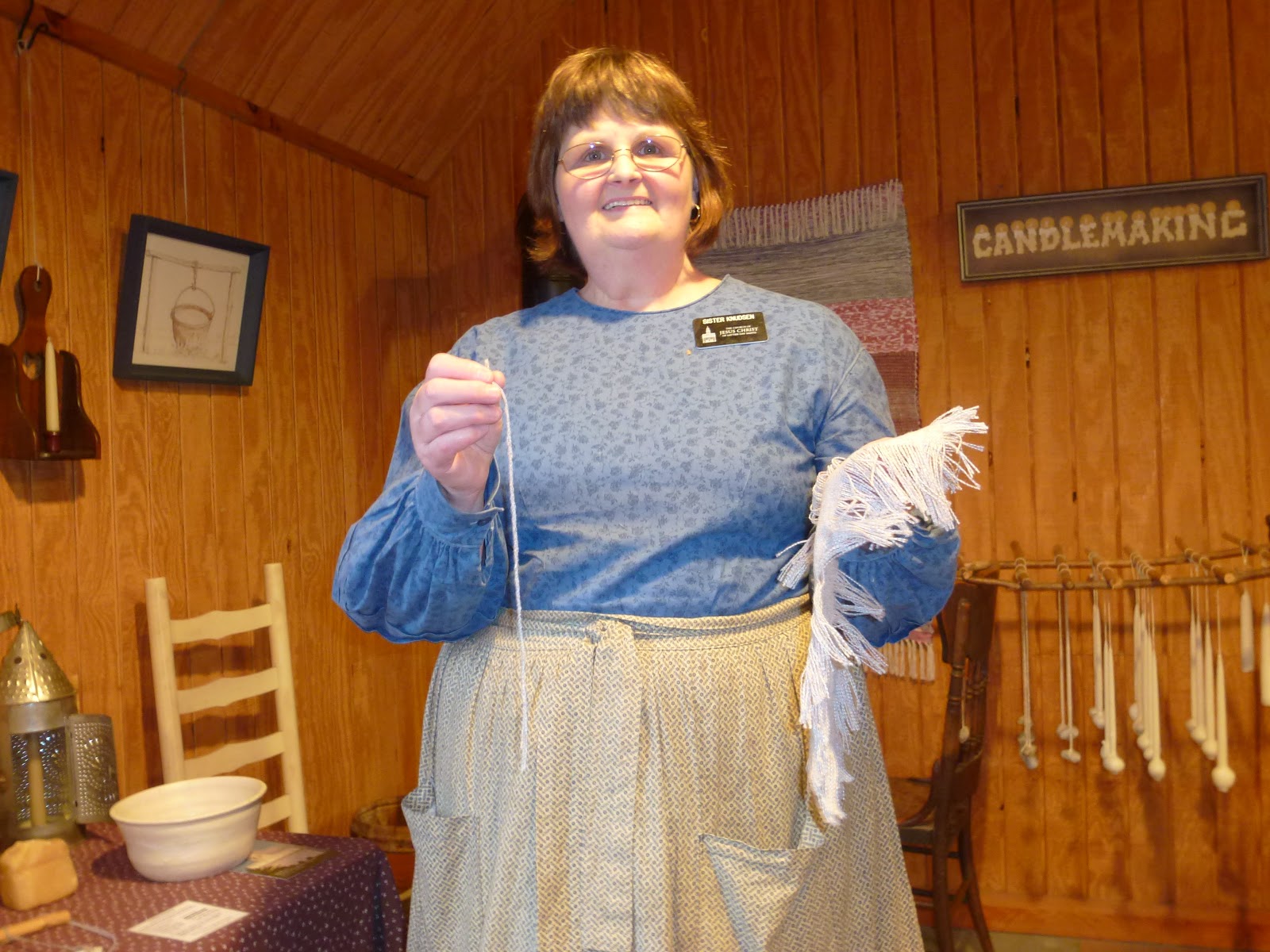
He untwists the twine to show the individual strands of sisal.


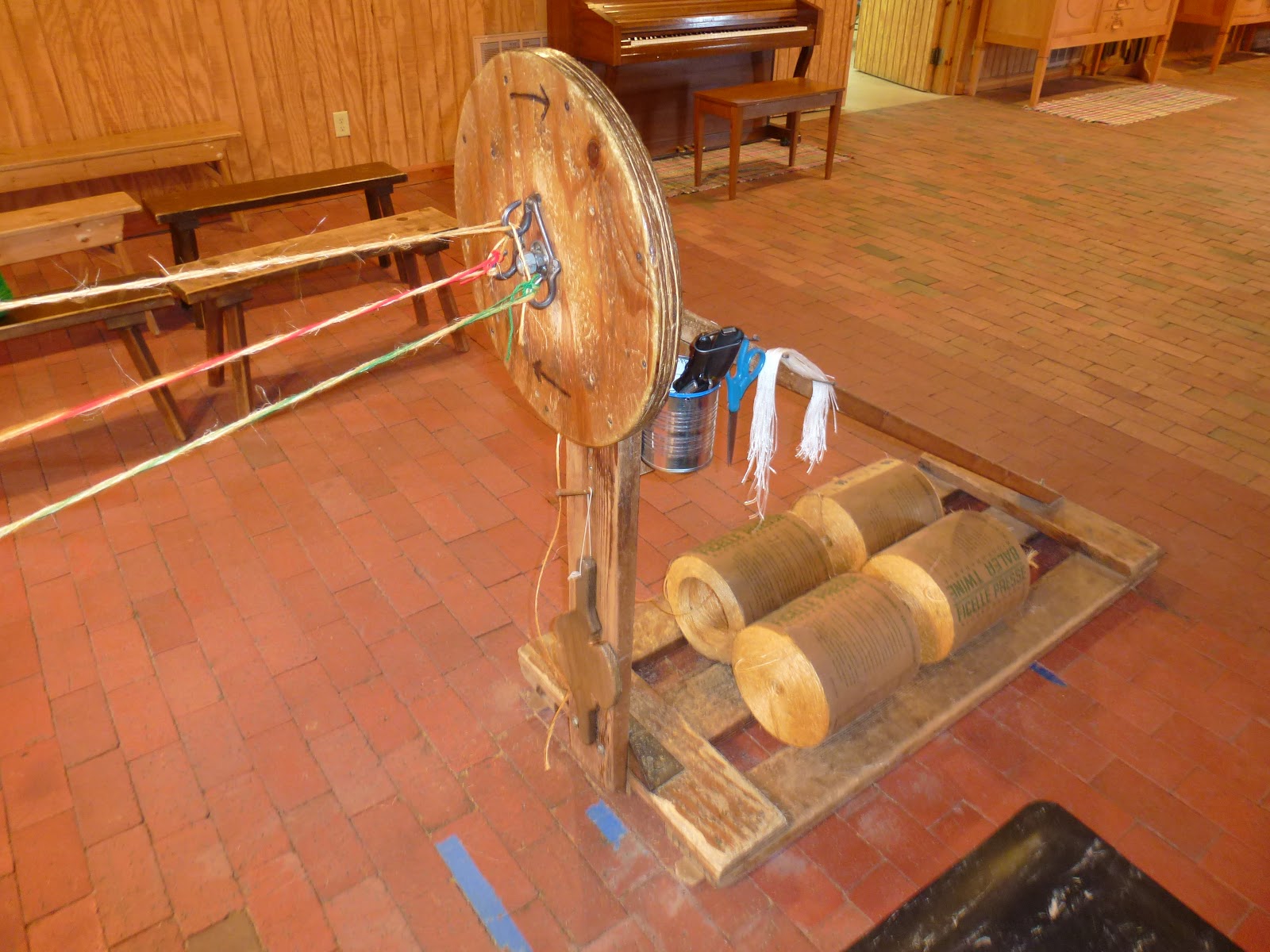
This is the stationary end of the rope machine.


This is the moving end, or sled.  It moves when you twist the rope.
 
 
He usually has one of the kids turn the wheel about 65 to 70 times to wind six strands into three strands. 
 
 
Then, they spin the small wheel to wind three strands into one strand.
 
 
The wood piece keeps pressure on the rope so it will twist tight.
 
 
Once the rope is twisted, he removes the wood piece.
 
 
Then he explains that this little string holds the rope together, just as the little things like love, kindness, caring etc. hold the family together.
 
 
Then he has someone help him whip (or bind) the rope at each end to keep it from unraveling.
 
 
Then he lets a little one count to three and other family members cut the rope off the machine.
 
 
You can tell if it is a good rope by how much of it you can make stand up straight.


Then he gives each family a rope to take home and tells them that each time they look at it they can remember how their family can be strong and bound together.
 
 
Elder Knudsen loves to do this demonstration with families with children.  The kids love the "hands on" aspect, and Elder K often makes the moms cry.


Thursday, February 28, 2013

Family Living Center (Spinning)

 
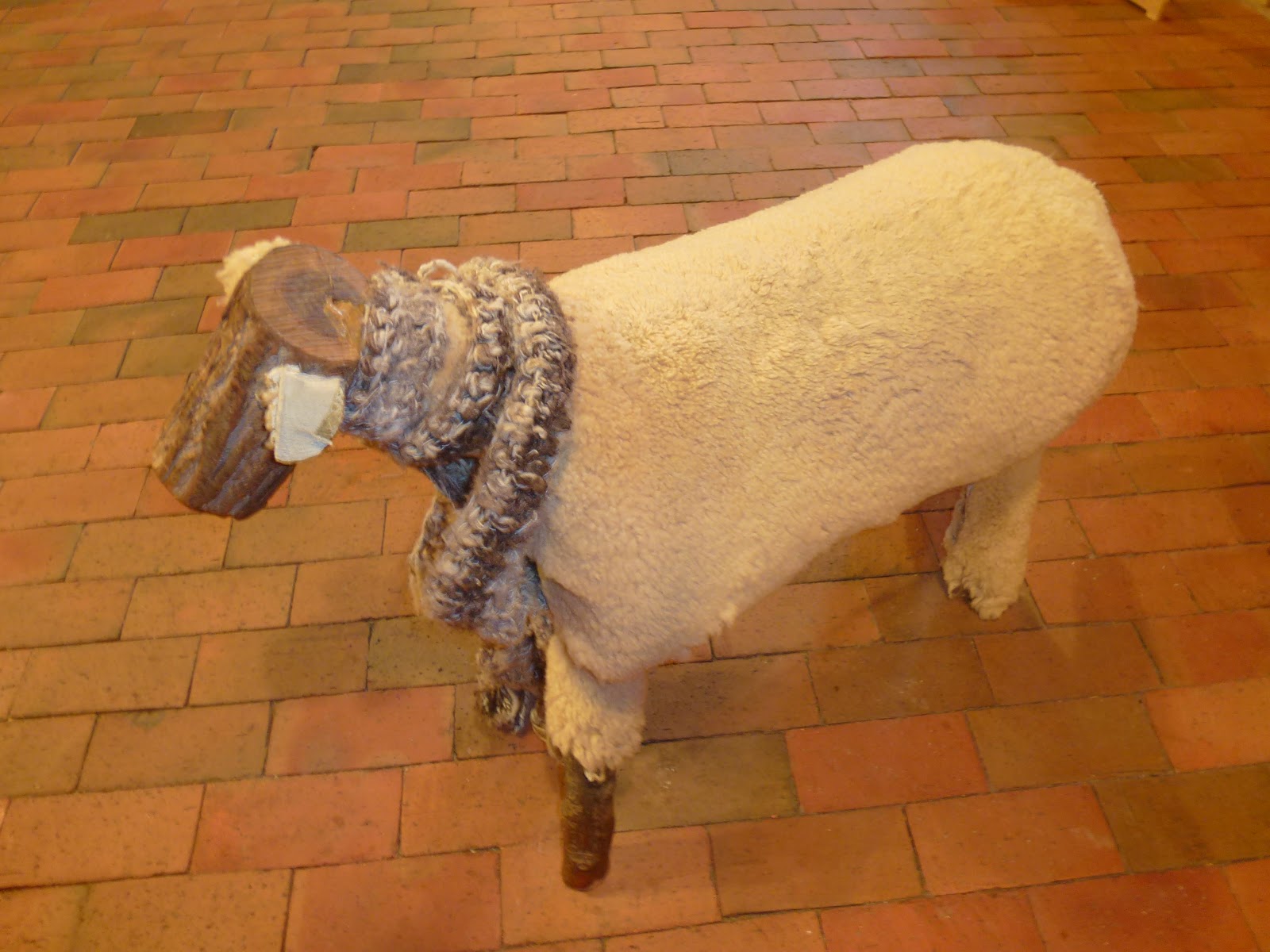
Here is where we do our wool & flax demonstration.  We have a cute little sheep to represent the sheep that were here in the 1840's.  During the summer he gets a  bit wobbly from all the little ones (and some big ones) who like to ride him.
 
 
We show how to card the wool.


We explain how the spinning was done but we don't actually do it.


Remember the song "Pop Goes the Weasel"?  Well this is the weasel they were singing about.  It's used to measure the wool after it is spun into yarn.  When a certain amount of yarn is wound on, it makes a popping sound.


After the yarn was spun, it was dyed using natural dyes.  My favorite is the red - they used Cochineal.  Anybody want to guess what that is? 


It's a red bug.  If you squish it, it explodes with this beautiful red dye.  Then they had to set the dye with vinegar, cream of tartar, alum, or salt.  Then they could make an article of clothing  with the yarn, but Nauvoo is VERY hot in the summer so I don't think wearing wool would be very comfortable. 
 
They had an alternative but it took a lot of time and work and patience.  Someone knew what to do with the flax that was growing around here.  It kind of looks like a weed and it has a really hard, tough stalk, but inside it has long, beautiful silky looking fibers.  It took up to two years to get them out.
 
 
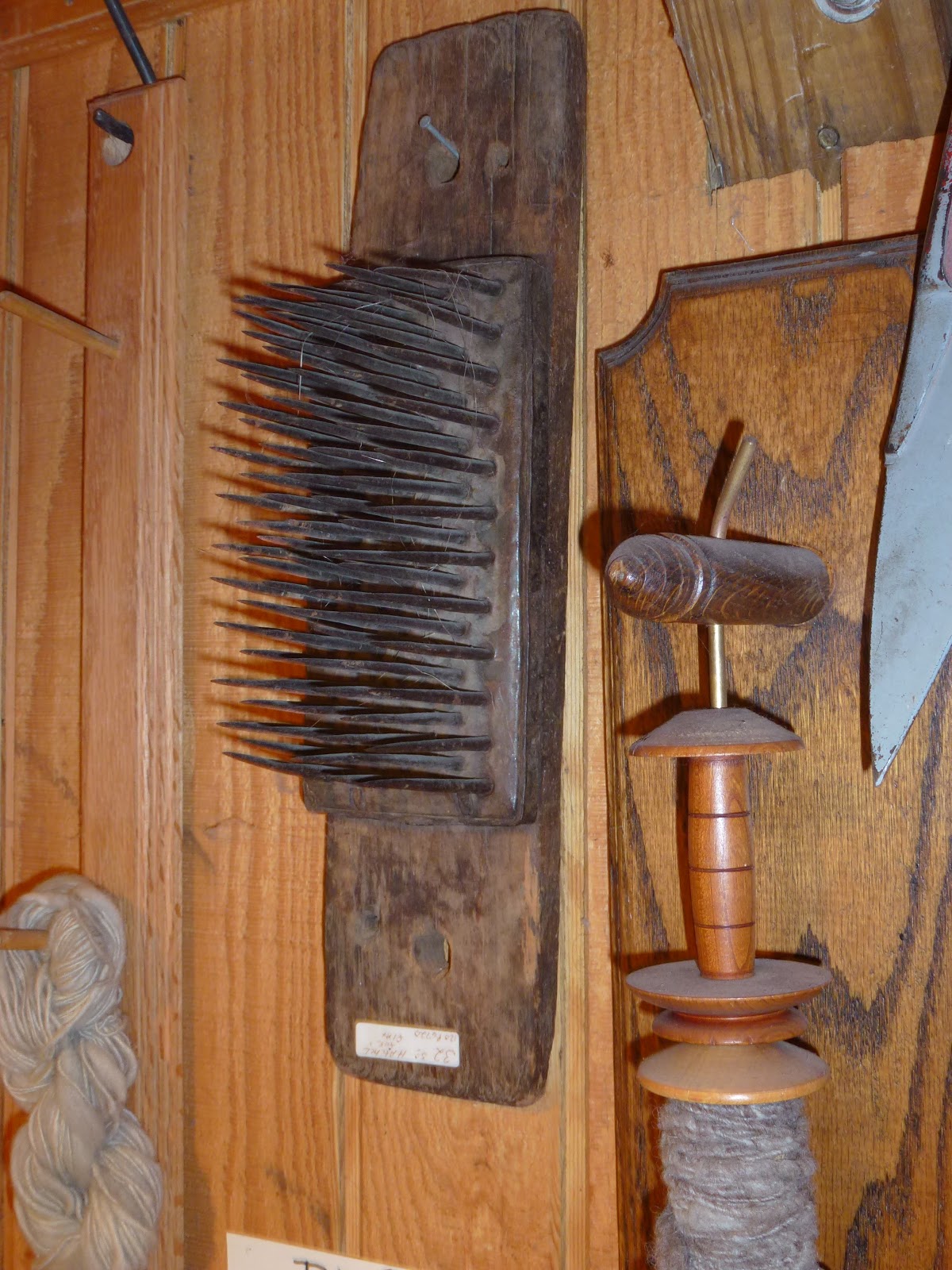
They would soak it in water, beat it, and hackle it with this wicked looking hackle board.


After this two year process, they could make fine linen.  Linen is not as durable as wool but it is cooler.  It also would not hold a natural dye, so it always stayed that natural color. 


To get the best of both fibers, they wove the wool and the flax together and made linsey-woolsey.  They used a simple weaving pattern for clothing.


And they made beautiful things for their homes with more elaborate patterns.  All the home sites in Nauvoo have linsey-woolsey on the beds and some have tablecloths.
 
 
When I do this demonstration I usually ask the guests if they can think of a project that has taken a lot of time and patience.  The one I think of is raising children.  It certainly takes a lot longer than two years but it is soooooo worth it.